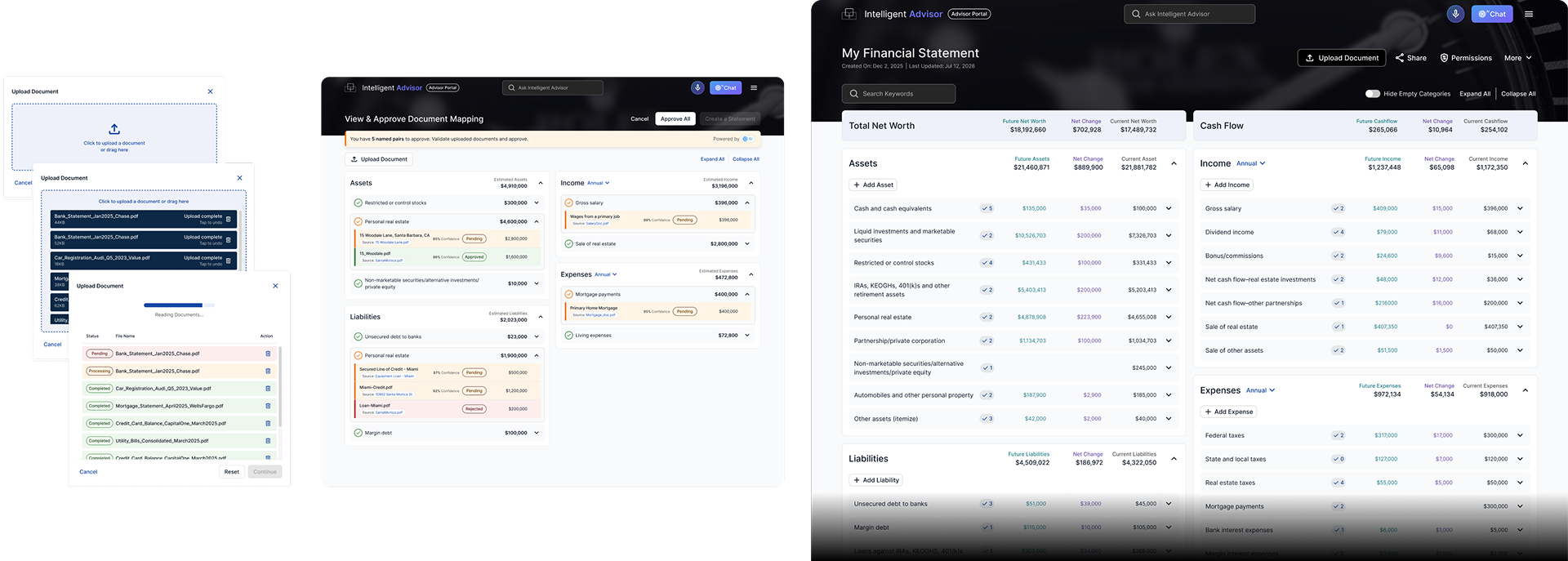
Design an AI powered wealth planning platform that helps advisors and high net worth clients turn complex financial data into clearer insights, smarter decisions, and more personalized planning.
Design this product while using AI not just as the subject of design, but as an active collaborator throughout the process.
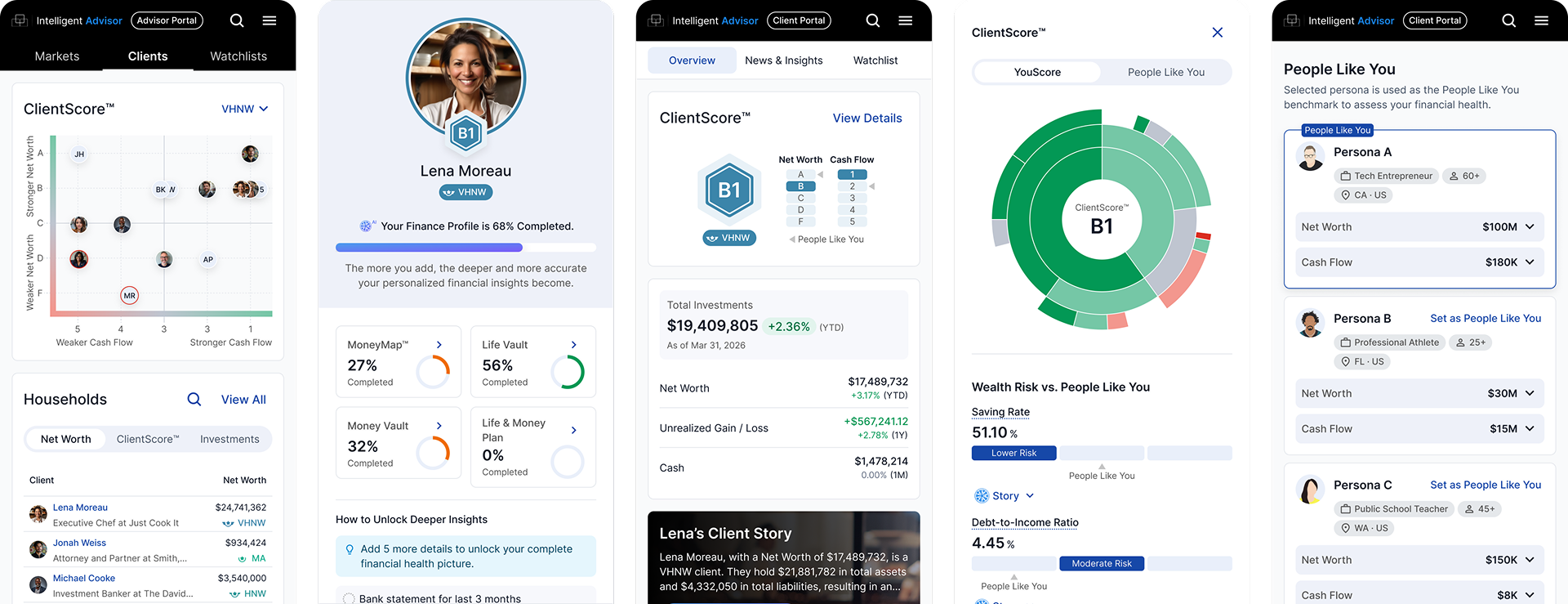
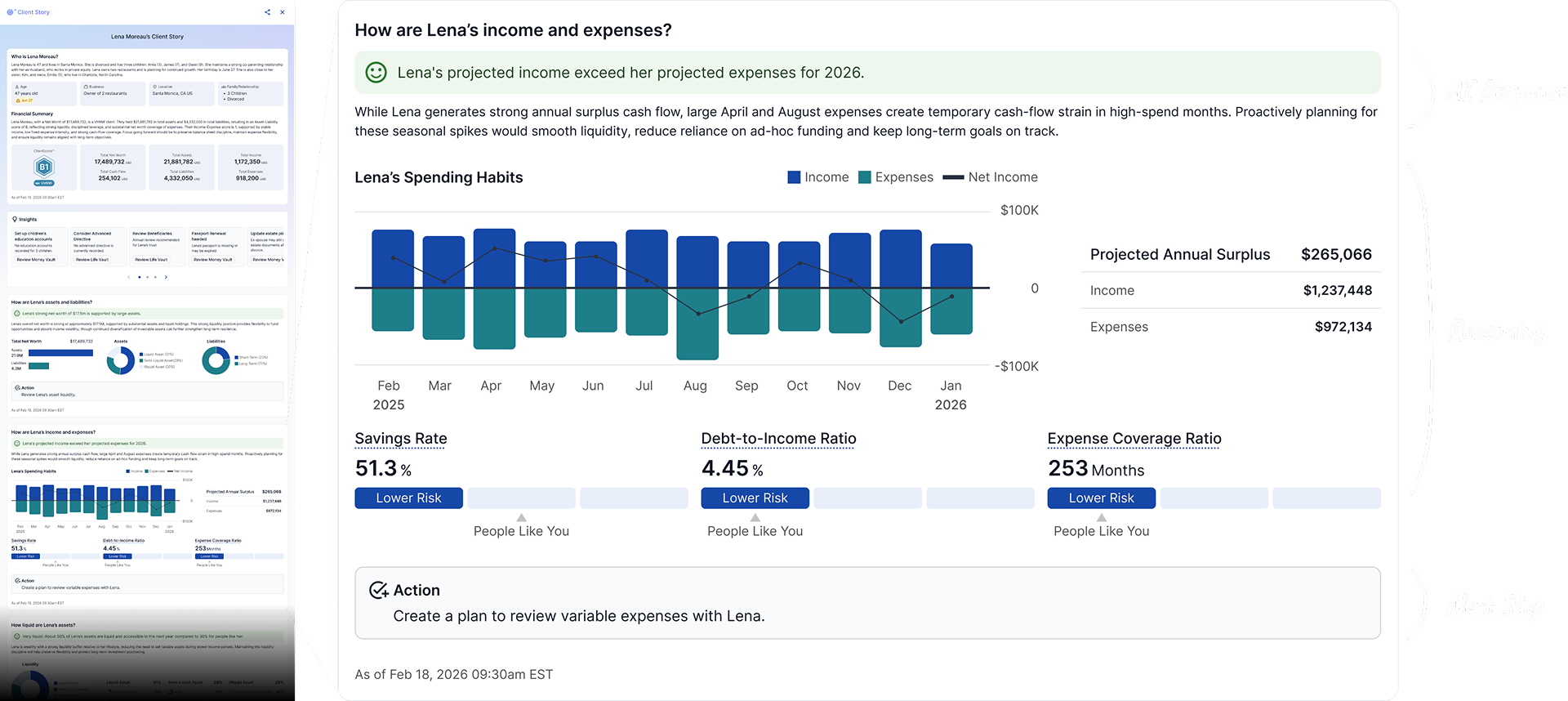
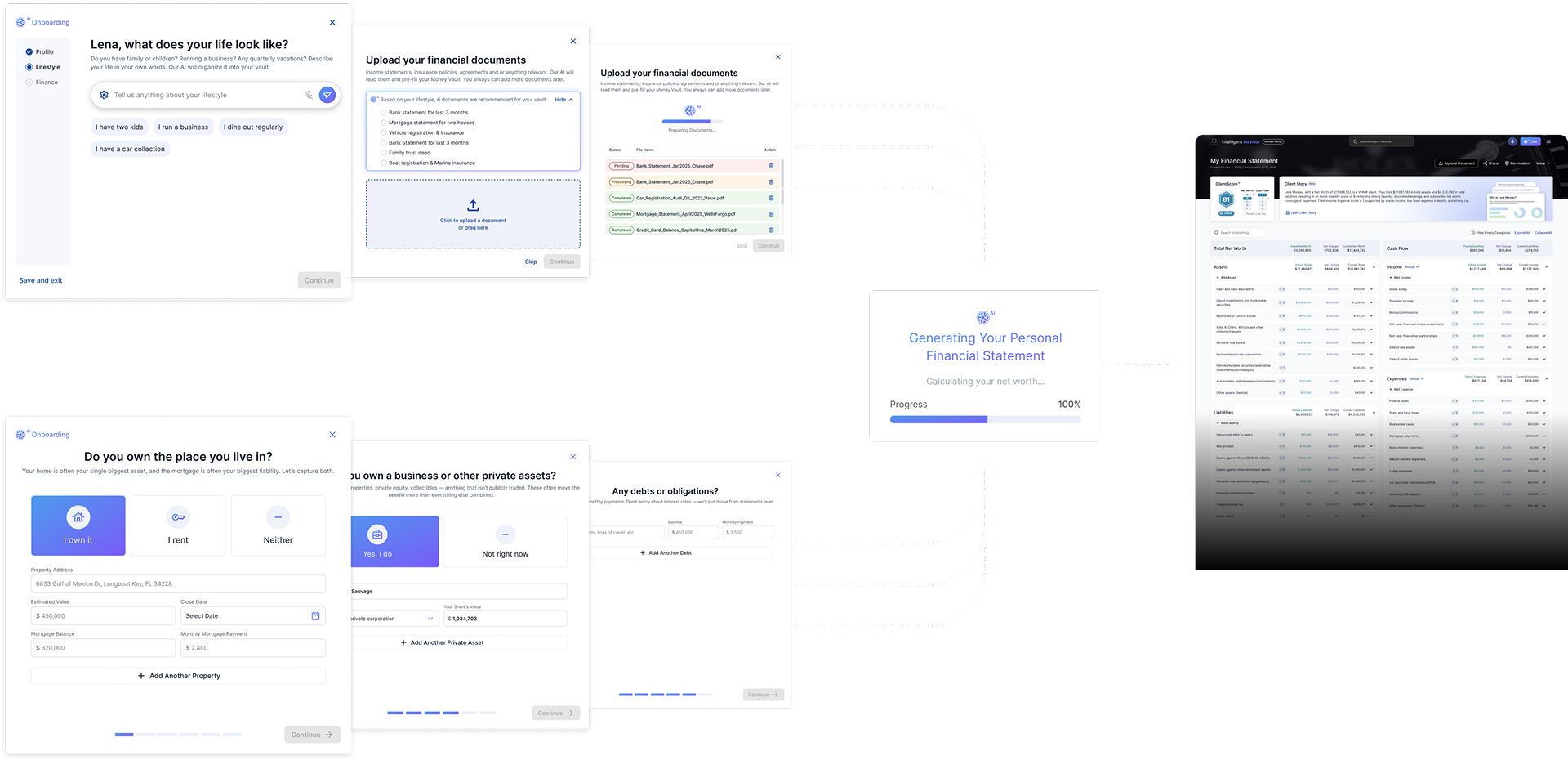
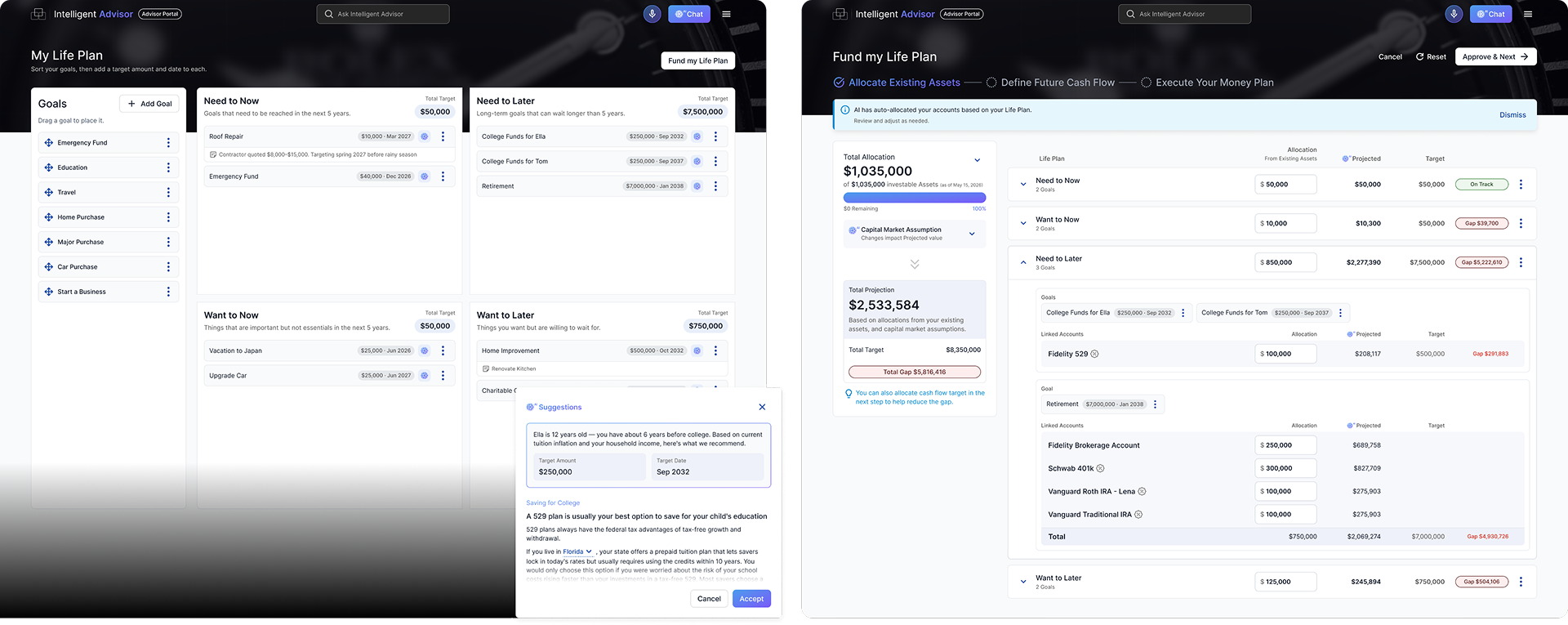
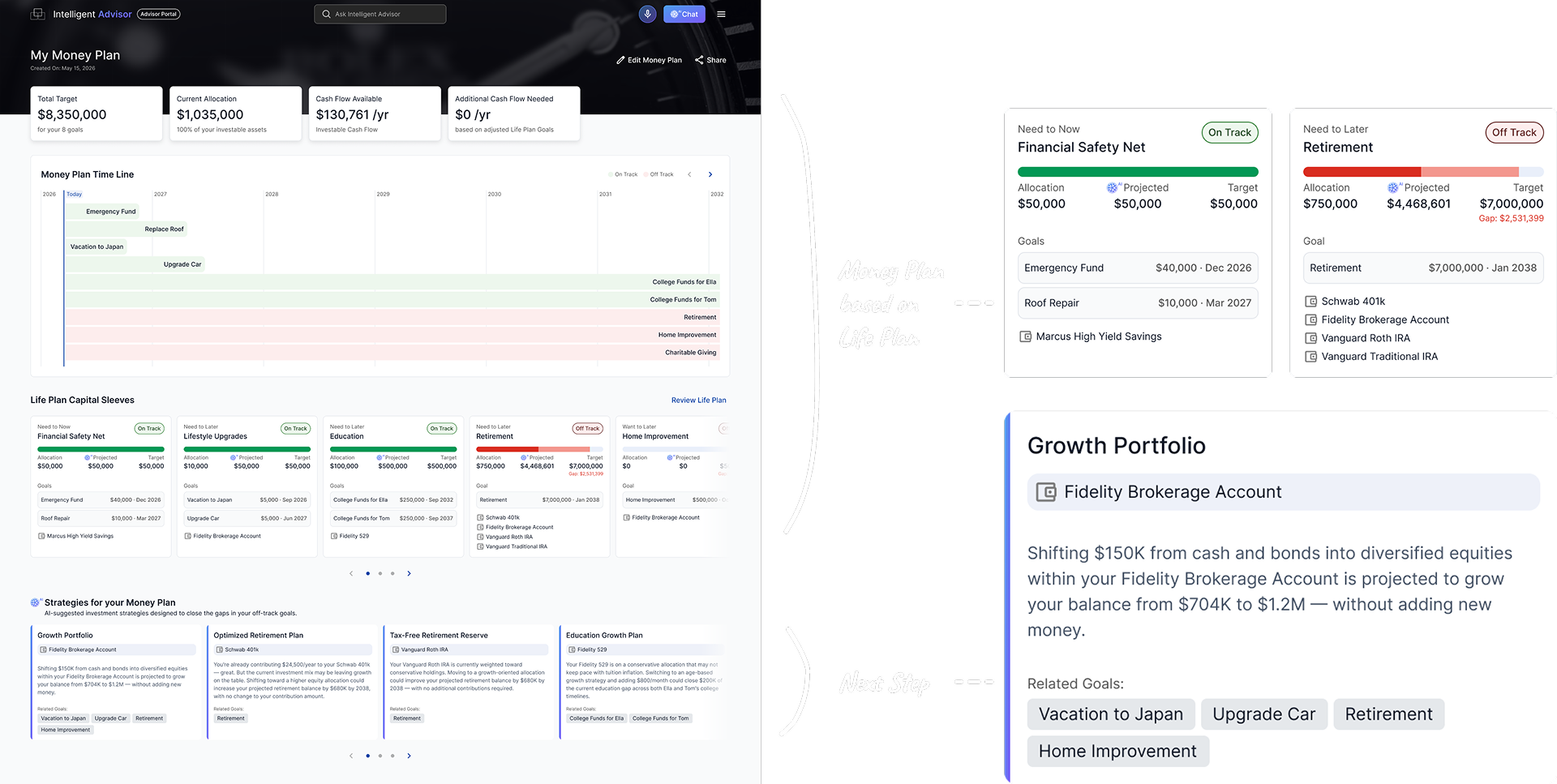
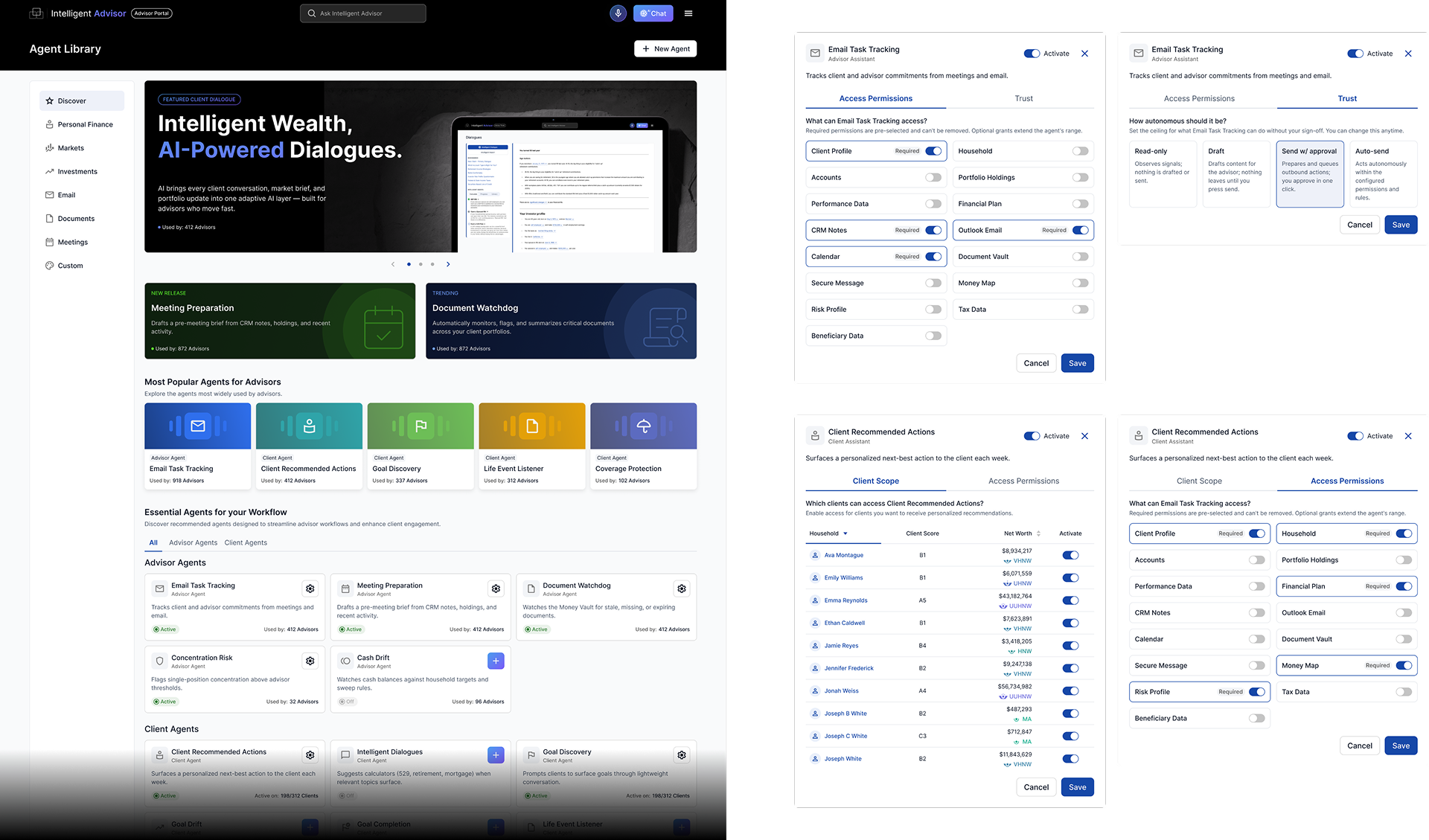
The platform is available for two distinct types of users. Advisors get analytical depth and control; clients get clarity and narrative. Both views draw from one data model, and these are the modules that connect them.
Designing an AI Product with AI
Human judgment remained central; AI accelerated exploration.
I used AI as a design collaborator to accelerate exploration, validate ideas, and iterate faster across the product lifecycle. The biggest advantage was rapid prototyping, which helped test and compare ideas far more quickly than traditional workflows.
Discovery & Alignment
Align on problems, opportunities, and product direction.
Collaborate with stakeholders, leadership, product owners, and sales to identify business goals and user needs.
Research benchmarks and competitor patterns to surface insights and best practices. Flesh out the feature definition.
Rapid Ideation with Prototyping
Turn ideas into testable prototypes with the biggest productivity gain from AI.
Define MVP scope, key flows, and success criteria to guide exploration based on business requirements.
Generate interactive prototypes quickly, compare multiple directions, and validate ideas.
Deep Feature Exploration
Design complex modules and workflows at scale.
Make product decisions, define experience principles, and refine workflows for final design assets.
Explore feature logic, module flows, and edge cases to stress test scenarios and expand solution possibilities.
Visual & Content Iteration
Accelerate design variations and UX writing.
Curate visual direction, prioritize options, and ensure consistency across the product.
Generate layout variations, visual concepts, feature naming, and microcopy to accelerate iteration.
Three core challenges shaped this product. Here's how I resolved each.
Advisors are accountable for every client outcome. AI output they cannot verify is output they will not use.
Automate too much and the advisor becomes a rubber stamp. Automate too little and the AI is not worth adopting.
Advisors need depth and control. Clients need clarity and confidence. The same financial data has to serve both.
Every recommendation surfaces the inputs behind it, so advisors can trace, verify, and defend the logic to clients.
AI drafts the analysis and the narrative. The advisor edits and approves before anything reaches the client.
Shared data models render differently by user types: analytical density for advisors, narrative simplicity for clients.
Advisors are accountable for every client outcome. AI output they cannot verify is output they will not use.
Every recommendation surfaces the inputs behind it, so advisors can trace, verify, and defend the logic to clients.
Automate too much and the advisor becomes a rubber stamp. Automate too little and the AI is not worth adopting.
AI drafts the analysis and the narrative. The advisor edits and approves before anything reaches the client.
Advisors need depth and control. Clients need clarity and confidence. The same financial data has to serve both.
Shared data models render differently by user types: analytical density for advisors, narrative simplicity for clients.
Led design for the full platform across advisor and client portals, from AI-driven modules to the core product experience. The platform is in active development.